Vietnamese Love Poem in English, by Nguyên Sa
Original title: Thirteen
This Vietnamese love poem is Nguyên Sa's Tuổi mười ba, or Thirteen, in an English version by Xuan Duong. A young man remembers a girl of thirteen, their school days and the colors of her robes. It shows the gentle school age romance of a famous romantic poet from 1950s Saigon, and it lives on today as a song.
Key facts
- Poet
- Nguyên Sa, pen name of Trần Bích Lan (1932 to 1998)
- Translator
- Xuan Duong, second version, April 2002
- First published
- Vietnam Journal, January 2003 issue
- Type
- Poem in translation
- What it covers
- First love, school days and the colors of school robes
The original article
Below is the full text as Vietnam Journal printed it, with its credit. We have not changed the authors' words.
Thirteen
By Nguyen Sa
Translated from the Vietnamese poem "Tuoi Muoi Ba" by Xuan Duong (second version April 2002) / picture courtesy of photographer Phuoc-Diem, www.vsasjsu.com
First published in Vietnam Journal, January 2003 issue
An image appeared here in the original.
Is it going to be sadly rainy or lovingly sunny
I'll go home if it rains
the bubbles all burst in my hands
back here I'll stay if sweet the sunny rays
once shining gently her verandah the date
was maybe fifteen or sixteen but as I remember
thirteen she only
I had to beg her to behave and not
be naughty I had to coax her
as if I was a grown-up
out my feet were about to step
but look! my eyes still got fixed
came then close she to me
could only I manage to...
turn aside
oh! those times together
in class and tests
every time she had gone heard this murmur
in me, no! not the right time just yet
her yellow robe inspires me
to love the chrysanthemums
her blue robe induces me
to adore our school's leaves
fearing my pink letter carries not enough of my
love
I
blend the ink to please
her
purple dress
The original page, Vietnam Journal January 2003, as kept by the Internet Archive: http://www.vietnamjournal.org/article.php?sid=118
How to read this translation
Some lines put the verb before the subject, as in "came then close she to me." Read them slowly, the way you would read old verse. The odd order makes the speaker sound shy and unsure.
The colors carry the story. Yellow goes with chrysanthemums, blue goes with the school's leaves, and purple closes the poem.
At the end the lines break down to single words. The breaks slow the reader at the moment the speaker is most shy.
Source: the poem above, in Xuan Duong's translation.
Context today
Nguyên Sa was the pen name of Trần Bích Lan. He studied philosophy in Paris and came home to Saigon in 1956, where he taught. He left for France in 1975, moved to California three years later, and lived there until he died in 1998.
Many Vietnamese know this poem as a song. The composer Ngô Thụy Miên set Tuổi mười ba to music, along with Nguyên Sa's poem Áo lụa Hà Đông.
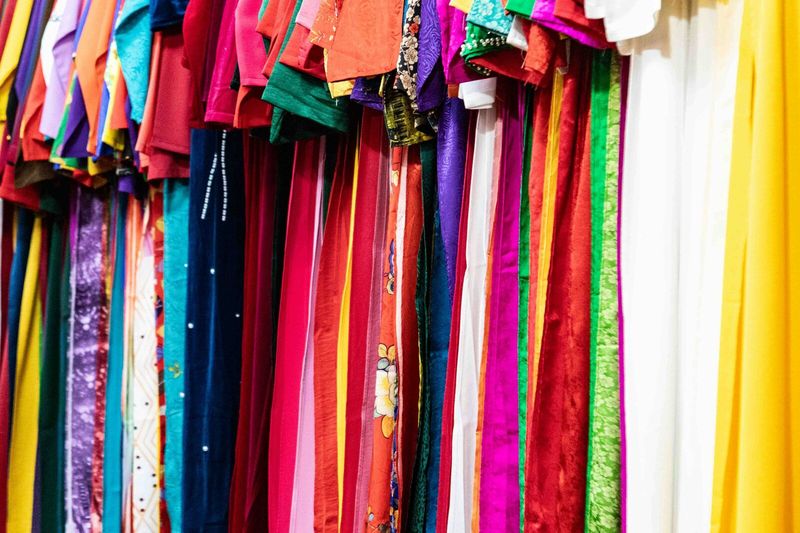
The robes in the poem are most likely áo dài, the long dress many girls wore to school. The áo dài is still a school uniform for many high school girls in the south of Vietnam.
Sources: Wikipedia, Nguyên Sa (Vietnamese), read 17 November 2026; Wikipedia, Áo dài, read 17 November 2026.
Questions readers ask
Who wrote the poem Thirteen?
Nguyên Sa wrote it in Vietnamese as Tuổi mười ba. Nguyên Sa was the pen name of Trần Bích Lan, who lived from 1932 to 1998.
Who translated it into English?
Xuan Duong made this English version for Vietnam Journal. The credit calls it the second version, from April 2002.
What is the poem about?
A speaker looks back on a girl who was only thirteen. He recalls class, tests and her robes in yellow, blue and purple. He also recalls a pink letter he feared did not say enough.
Is Tuổi mười ba also a song?
Yes. The composer Ngô Thụy Miên set it to music. He also set Nguyên Sa's poem Áo lụa Hà Đông.
Sources
More from January 2003 issue.