Vietnamese Traditional Dress and Where to See It
Vietnamese traditional dress is a family of garments, not one outfit. The most familiar is the áo dài, a long tunic split at the sides and worn over trousers. Older pieces include the yếm, a simple bodice, and the áo tứ thân, a four part tunic, and this guide covers each one and where a visitor will see it.
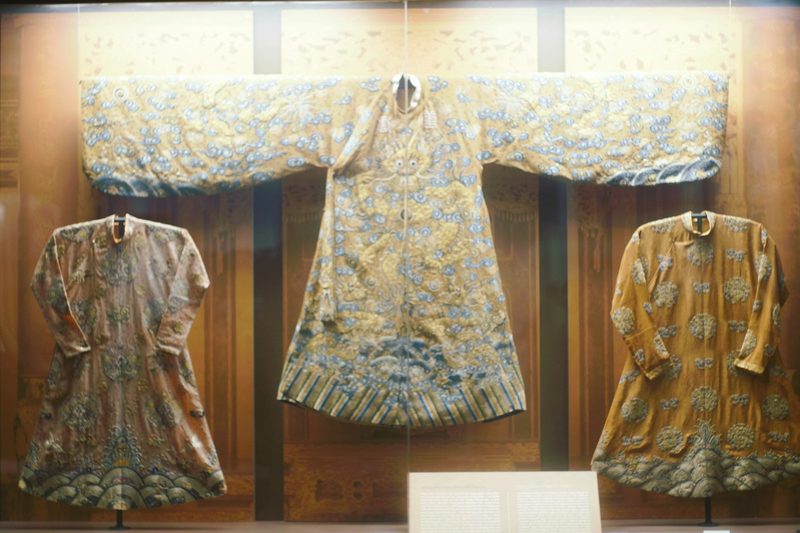
The áo dài
The name means "long shirt." It is a fitted tunic with a high collar and long sleeves. Below the waist it splits into a front flap and a back flap, and it is worn over loose trousers.
The áo dài is worn by women and men. Women wear it most often, and it comes in many colors and cloths. On Tết, the Lunar New Year, some men wear a thick brocade version called the áo gấm.
Sources: Áo dài article, Wikipedia, read 16 November 2026.
How the áo dài came to look the way it does
The garment grew out of a five piece gown called the áo ngũ thân. In 1744 Lord Nguyễn Phúc Khoát, who ruled the south from Huế, told his court to wear trousers and a gown that buttoned down the front. This set the southern court apart from the north, where long skirts were still worn.
In 1930 a Hà Nội artist named Cát Tường, who used the name Le Mur, made a closer fitting design inspired by Paris fashion. In the 1950s tailors in Sài Gòn tightened the fit again and added the sleeve and seam style most people picture today.
Sources: Áo dài article, Wikipedia, read 16 November 2026, citing Lê Quý Đôn's Phủ Biên Tạp Lục.
The yếm
The yếm is a square or diamond of cloth worn over the chest and tied with strings at the neck and back. For centuries it was worn as an under layer by women of every class, from farm workers to court ladies.
It was usually hidden under a blouse or tunic. Plain black and white yếm were for every day, while brighter ones were kept for special days.
Sources: Yếm article, Wikipedia, read 16 November 2026.
The áo tứ thân
The áo tứ thân is a four part tunic from northern Vietnam, worn long before the modern áo dài. It is open at the front like a jacket. It goes with a long skirt, a yếm underneath and a silk sash tied at the waist.
It was the dress of farming women, so it was often made in plain dark cloth. The ones worn today are much more colorful.
Sources: Áo tứ thân article, Wikipedia, read 16 November 2026.
When people wear these clothes today
The áo dài is the standard dress for weddings, Tết and other formal days. In parts of the south it is also a school uniform for girls in high school and for many women teachers. A visitor in a city will often see white áo dài on students.
The yếm and áo tứ thân are no longer daily wear. You are most likely to see them at festivals in the north, in folk singing shows and in photos taken for Tết.
Sources: Áo dài and Áo tứ thân articles, Wikipedia, read 16 November 2026.
Where a visitor can see or have one made
The Vietnamese Women's Museum at 36 Lý Thường Kiệt in Hà Nội tells the story of women in the country's history and culture, and it is open every day from 8 am to 5 pm. Check its site before you go, since hours can change.
To have an áo dài made, visitors in Hà Nội often go to Lương Văn Can Street in the Old Quarter, and Huế is known for its áo dài and leaf hats. A tailor will measure you and usually ask you to come back for a fitting. We do not list or rate shops.
If you wear one, it is a sign of respect, not a costume. Many Vietnamese people like to see a visitor in an áo dài at a wedding or on Tết.
Sources: Vietnamese Women's Museum site and Áo dài article, Wikipedia, both read 16 November 2026.
What the old áo dài and the new one share
The one thing most guides skip is that the side slits, the high collar and the buttons that run across to the shoulder all go back to the 1700s gown. Fit and fabric changed, but the basic shape is centuries old. You can look for those three details on any áo dài you see.
More guides from this series: gấc fruit and red sticky rice, Đông Sơn bronze drums and how Vietnamese came to use the Latin alphabet.
Sources: Áo dài article, Wikipedia, read 16 November 2026.
About the original article
The first Vietnam Journal published "Vietnamese Traditional Costumes and Fashion" by the Gia Long Alumni Association of Seattle. This guide is new and does not reuse its text. You can read the original in full in our archive.
Sources: Vietnam Journal archive, inventory of the original magazine, read 16 November 2026.
Questions visitors ask
What is the difference between an áo dài and an áo tứ thân?
The áo dài is a fitted long tunic with a high collar that splits into a front and back flap over loose trousers. The áo tứ thân is an older four part tunic from northern Vietnam that opens at the front like a jacket. It is worn with a long skirt, a yếm underneath and a silk sash.
When do Vietnamese people wear the áo dài today?
The áo dài is the standard dress for weddings, Tết and other formal days. In parts of the south it is also a school uniform for high school girls and for many women teachers.
Is it OK for a visitor to wear an áo dài?
Yes. Wearing one is a sign of respect, not a costume. Many Vietnamese people like to see a visitor in an áo dài at a wedding or on Tết.
Where can I have an áo dài made in Hà Nội?
Visitors in Hà Nội often go to Lương Văn Can Street in the Old Quarter. A tailor will measure you and usually ask you to come back for a fitting. We do not list or rate shops.
Sources
- Wikipedia contributors, Áo dài, Wikipedia, read 16 November 2026. Draws on Lê Quý Đôn's Phủ Biên Tạp Lục and published fashion histories.
- Wikipedia contributors, Yếm, Wikipedia, read 16 November 2026.
- Wikipedia contributors, Áo tứ thân, Wikipedia, read 16 November 2026.
- Vietnamese Women's Museum, official site, address and opening hours, read 16 November 2026.