Ancient Vietnamese Coins and How to Read Them
Ancient Vietnamese coins are round metal coins with a square hole in the middle, known in English as cash. Vietnam cast them for almost a thousand years, from the Đinh dynasty in the late 900s until the end of the Nguyễn dynasty in 1945. Each coin carries four characters that name the reign that made it.
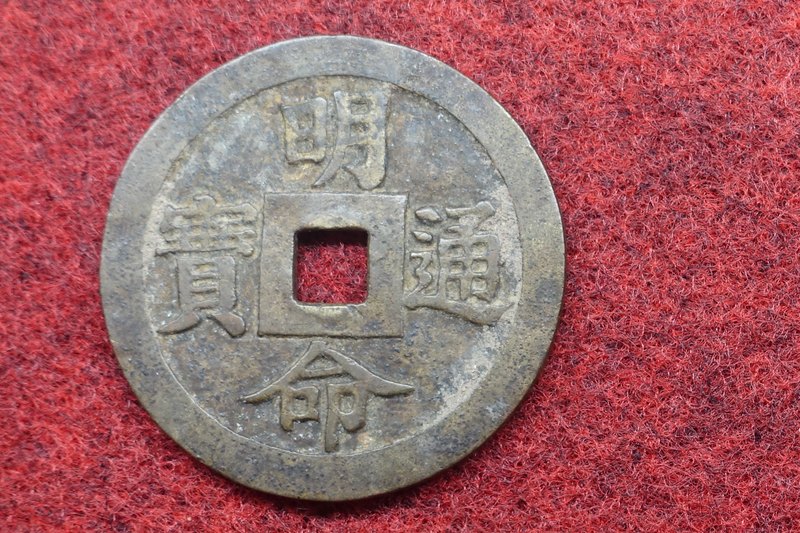
What a Vietnamese cash coin looks like
A cash coin was cast in metal at a mint. The square hole let people thread coins onto a string, and the French name for the coins may come from the habit of counting them in strings of about a hundred.
Most coins are a little over two centimeters across. Many were made of copper alloy, but lead, iron and zinc coins were also made at different times.
Sources: Vietnamese cash article, Wikipedia, read 16 November 2026.
How to read the four characters
The writing on the face is in Chinese characters, which were used for official writing in Vietnam at the time. Two of the four characters give the reign name, such as Cảnh Hưng. The other two are often Thông Bảo, which means "circulating cash."
The four characters are read in one of two orders: top, bottom, right, left, or around the coin, top, right, bottom, left. Knowing both helps you match a coin to a reign in a catalog.
Sources: Vietnamese cash article, Wikipedia, read 16 November 2026.
The first coins
The first Vietnamese coins were cast under Đinh Bộ Lĩnh, who ruled in the late 900s. They read Thái Bình Hưng Bảo. For the next two hundred years, coins were still rare in daily life, and most people traded goods instead.
Sources: Vietnamese cash article, Wikipedia, read 16 November 2026.
Paper money, zinc and strings of cash
In 1396 Hồ Quý Ly tried to replace coins with paper notes. People did not trust the paper, and coins stayed in use.
Later rulers turned to cheaper metals. Zinc coins appeared in the 1700s and became the main money under the Nguyễn kings in the 1800s.
Zinc was brittle, and coins often broke when the strings snapped. The French word for these coins, sapeque, is still used by collectors.
Sources: Vietnamese cash article, Wikipedia, read 16 November 2026.
The money units
Old Vietnamese money had three units. One quan was ten tiền, and one tiền was a set number of single coins, called đồng. That number changed over time, from 50 to more than 60.
The word đồng is still the name of Vietnam's money today.
Sources: Vietnamese cash article, Wikipedia, read 16 November 2026.
Where a visitor can look for them
The Vietnam National Museum of History in Hà Nội, at 1 Tràng Tiền Street, shows objects from the Đinh and Lê eras onward. We have not confirmed which museum has coins on display right now, so ask at the desk or check the museum's own site before you go.
Coins offered to visitors may be copies, and we cannot check them for you. We do not give advice on buying or on value, and you should check the rules on taking old objects out of the country before you buy.
Sources: Vietnam National Museum of History site and Vietnamese cash article, Wikipedia, both read 16 November 2026.
Why some coins say they come from Japan
Few pages mention that many coins used in Vietnam were made abroad. In the 1600s, traders brought in large numbers of Chinese and Japanese coins, and some coins cast in Nagasaki were made just for trade with Vietnam. Mints in Macau also cast coins for Vietnam.
So a coin found in Vietnam can name a reign from another country.
At home, the Cảnh Hưng coins of 1740 to 1776 come in more basic types than any other single reign's coins in East Asia, says historian Luke Roberts. Some swap Thông Bảo for words such as "large cash" or "true cash."
More history guides: Đông Sơn bronze drums, Lê Văn Tám Park in Sài Gòn and where Vietnamese words come from.
Sources: Vietnamese cash article, Wikipedia, and Luke Roberts, Cảnh Hưng coins, both read 16 November 2026.
About the original article
"Introduction to Ancient Vietnam Coin" by Thuan Luc appeared in the first Vietnam Journal. We wrote this page from fresh sources and did not reuse any of it. You can read it in full, with credit to its author, in our archive.
Sources: Vietnam Journal archive, inventory of the original magazine, read 16 November 2026.
Questions visitors ask
How can I tell which reign an old Vietnamese coin is from?
Two of the four Chinese characters on the face give the reign name, such as Cảnh Hưng. The characters are read top, bottom, right, left, or around the coin, so try both orders when you look a coin up in a catalog.
What were old Vietnamese coins made of?
Many were made of copper alloy, but lead, iron and zinc coins were also made at different times. Zinc coins became the main money under the Nguyễn kings in the 1800s.
Why do Vietnamese cash coins have a square hole?
The square hole let people thread the coins onto a string. Coins were counted in strings, and zinc ones often broke when a string snapped.
Are the old coins sold to visitors real?
Coins offered to visitors may be copies, and we cannot check them for you. We do not give advice on buying or on value, so check the rules on taking old objects out of the country before you buy.
Sources
- Wikipedia contributors, Vietnamese cash, Wikipedia, read 16 November 2026. Cites the court chronicles Dai Viet su ky toan thu and Dai Nam thuc luc.
- Roberts, Luke, Cảnh Hưng coins, University of California, Santa Barbara, history department pages, read 16 November 2026.
- Vietnam National Museum of History, official site, address and opening hours, read 16 November 2026.