Mạc Đĩnh Chi Cemetery, Now Lê Văn Tám Park
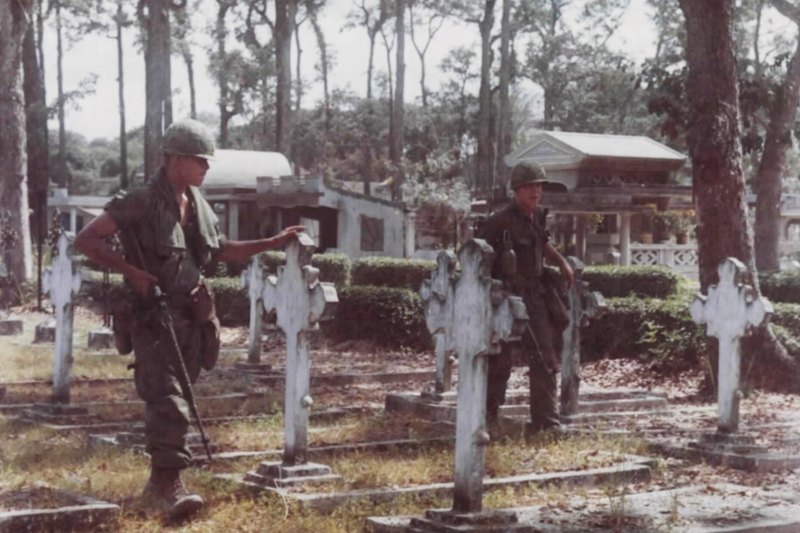
The Mạc Đĩnh Chi Cemetery, as it was later called, was the European Cemetery of Sài Gòn from 1859 until 1983. In 1983 the city moved the graves and turned the land into Lê Văn Tám Park, the public park that stands in central Hồ Chí Minh City today.
Where the park is
The park sits north of the old city center, beside Hai Bà Trưng Street. Its old main gate faced the street now called Điện Biên Phủ. Today it is open green space with a large statue near its middle.
Sources: Tim Doling, Saigoneer, 15 September 2014, and Lê Văn Tám Park article, Wikipedia, read 16 November 2026.
How the cemetery began
The French opened the European Cemetery in 1859. At first it was a military cemetery run by the French Navy, for soldiers and sailors who died when France took Sài Gòn.
By 1895 it held 239 military graves. From the late 1860s civilians were buried there too, and in the 1880s the city took over from the navy.
Sources: Tim Doling, Saigoneer, 15 September 2014, and Lê Văn Tám Park article, Wikipedia.
Why it had so many names
The cemetery took its name from the streets beside it. In 1920 the street by the main gate was named rue de Massiges, so people called it the Massiges Cemetery.
In March 1955 that street was renamed for Mạc Đĩnh Chi, a Vietnamese scholar and diplomat who lived from 1280 to 1350. The cemetery then became the Mạc Đĩnh Chi Cemetery, the name many older people in the city still use.
Sources: Lê Văn Tám Park article, Wikipedia, read 16 November 2026.
Who was buried there
The cemetery held French officials, and later Vietnamese politicians, generals and well known figures of South Vietnam. President Ngô Đình Diệm and his brother Ngô Đình Nhu were buried there in unmarked graves after they were killed.
The French reporter Francois Sully and the American missionary Grace Cadman were also buried there.
Sources: Lê Văn Tám Park article, Wikipedia, read 16 November 2026.
Why the graves were moved
In 1983 the Hồ Chí Minh City People's Committee passed a resolution to close the cemetery. Families had two months to claim the remains of their relatives. Many were moved to Lái Thiêu Cemetery, then in Bình Dương province.
The tombs that were left were then cleared, and a children's park and playground were built on the land.
Sources: Lê Văn Tám Park article, Wikipedia, read 16 November 2026.
Who Lê Văn Tám was
The park is named for Lê Văn Tám, a figure honored as a hero of the war against France. The story says he set himself on fire to destroy a French fuel store in 1946. In 2005, research reported in Vietnam said the story was made up for wartime use.
A large statue of him stands in the park. Visitors can see it from the paths.
Sources: Lê Văn Tám Park article, Wikipedia, read 16 November 2026.
Visiting today
Today the park is a public green space in the city center, with the statue at its middle. Check local notices for events and opening times before you go.
Know the history before you go. This was a burial ground for well over a century, and some families lost the graves of their relatives when it closed, so be quiet and respectful.
Sources: Lê Văn Tám Park article, Wikipedia, read 16 November 2026.
Reading the old map on today's streets
Most pages about the park stop at the statue. Walk along the streets beside it and you follow the roads the cemetery once stood on.
Hai Bà Trưng Street was once rue Nationale, and the cemetery lay on its east side. Điện Biên Phủ Street was rue Legrand de la Liraye, where the main gate stood. An 1871 map shows the European Cemetery and a Vietnamese cemetery next to it at the top edge of the city.
More guides: ancient Vietnamese coins, Vietnamese traditional dress and the archive of the first Vietnam Journal.
Sources: Tim Doling, Saigoneer, 15 September 2014, read 16 November 2026.
About the original article
Andrew Lam wrote "In The Age of Globalization, Even the Dead Travel" for the first Vietnam Journal, an essay that the park's Wikipedia page cites as a reference. Our guide is a new piece and borrows none of his words. His essay is in our archive, in full and credited to him.
Sources: Vietnam Journal archive, inventory of the original magazine, read 16 November 2026.
Questions visitors ask
What was Lê Văn Tám Park before it was a park?
It was a cemetery. The French opened it in 1859, and it was later called the Mạc Đĩnh Chi Cemetery. In 1983 the city moved the graves and built a park on the land.
What happened to the graves in 1983?
The Hồ Chí Minh City People's Committee passed a resolution to close the cemetery, and families had two months to claim the remains of their relatives. Many were moved to Lái Thiêu Cemetery, and the tombs left behind were cleared.
Who was Lê Văn Tám?
He is honored as a hero of the war against France. The story says he set himself on fire to destroy a French fuel store in 1946. In 2005, research reported in Vietnam said the story was made up for wartime use.
Who was buried in the Mạc Đĩnh Chi Cemetery?
It held French officials, and later Vietnamese politicians, generals and other well known people of South Vietnam. President Ngô Đình Diệm and his brother Ngô Đình Nhu were buried there in unmarked graves.
Sources
- Doling, Tim, Lê Văn Tám Park, the former Massiges Cemetery, part I, Saigoneer, 15 September 2014, read 16 November 2026.
- Wikipedia contributors, Lê Văn Tám Park, Wikipedia, read 16 November 2026.