Gấc Fruit: Season, Taste and Where to Try Xôi Gấc
Gấc fruit is a round, spiny, deep red fruit from a climbing vine in the melon family. In Vietnam its red pulp is cooked with sticky rice to make xôi gấc, a dish served at Tết and weddings. The fruit is only around for a few months a year, so a visitor needs good timing.
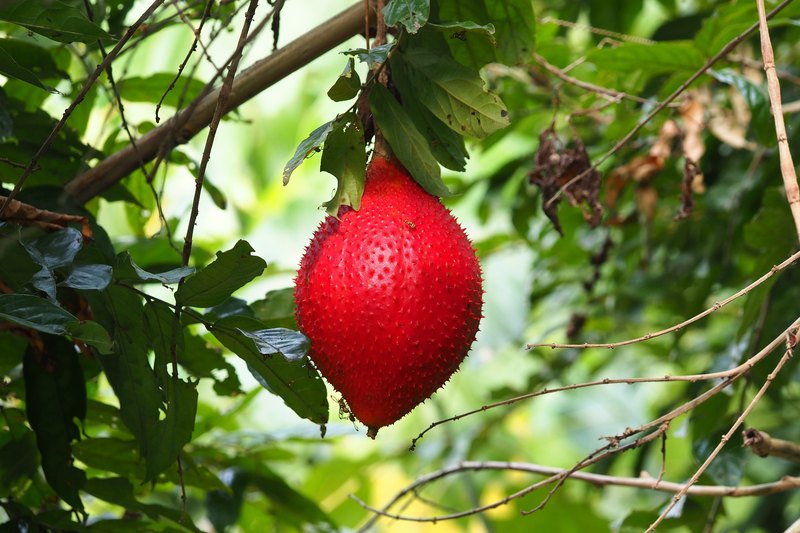
What gấc is
Gấc grows on a long climbing vine that can reach about 15 meters. The fruit is about 15 centimeters long and is covered in small spines. It starts green and turns deep orange and red when ripe.
Inside are flat brown seeds, each wrapped in a bright red layer called the aril. That red layer is the part used in cooking. The color comes from natural plant pigments called beta carotene and lycopene.
Sources: Gấc article, Wikipedia, and USDA GRIN record, both read 16 November 2026.
Where the name comes from
"Gấc" is the Vietnamese name. Scientists call the plant Momordica cochinchinensis. The second word means "from Cochinchina," the old name for southern Vietnam.
A Portuguese botanist, Joao de Loureiro, first described the plant in 1790 after seeing it there. Momordica comes from a Latin word for "to bite," because the seeds look as if they had been chewed.
Sources: Gấc article, Wikipedia, read 16 November 2026, citing Loureiro's Flora cochinchinensis.
When gấc is in season
North of the equator, the vine flowers from June to August and the fruit comes in around August to October. That is a short window, so the fresh fruit is not in markets all year.
If you want to see the whole fruit on the vine or at a stall, plan for the second half of the year. Xôi gấc is still made for Tết, which falls in January or February.
Sources: Gấc article, Wikipedia, read 16 November 2026.
How gấc is grown
Each gấc plant is either male or female. A farmer needs at least one male vine near the female vines, or there will be no fruit. Growers often help by moving pollen by hand.
Gấc needs a warm climate, and cool weather slows it down. That is one reason it is a fruit of Southeast Asia and not of colder places.
Sources: Gấc article, Wikipedia, read 16 November 2026.
Xôi gấc, the red sticky rice
To make xôi gấc, cooks cook the red arils with sticky rice. The rice turns a strong red orange color. The dish is served at Tết, the Lunar New Year, and on other special days such as weddings.
The same red pulp is also used as a natural food color. In other countries gấc turns up in curry and even with ice cream.
Sources: Gấc article, Wikipedia, read 16 November 2026.
Where a visitor can try it
Look for xôi gấc where sticky rice is sold, and around Tết, when it is made for the new year. If you are invited to a wedding or a Tết meal, you may see it on the table.
We do not list or rate stalls. Ask for "xôi gấc" by name, since it is easy to mix up with other red or orange sticky rice.
Sources: Gấc article, Wikipedia, read 16 November 2026.
Why a gấc fruit can look so different from the next one
Most pages show one perfect red fruit. In real markets you will see gấc in many shades, from green to orange to dark red, because each fruit is picked at a different stage. Only the ripe red ones are used for xôi gấc, so color is a quick way to tell what a seller has.
More food and culture guides: Vietnamese traditional dress, ancient Vietnamese coins and Lê Văn Tám Park in Sài Gòn.
Sources: Gấc article, Wikipedia, read 16 November 2026.
About the original article
In October 2001, Thuy-Le Vuong wrote "Gac: a Fruit from Heaven" for the first Vietnam Journal. Our guide sticks to food, is written from scratch, and shares none of its wording. The original is republished with credit in our archive.
Sources: Vietnam Journal archive, inventory of the original magazine, read 16 November 2026.
Questions visitors ask
What is gấc fruit?
Gấc is a round, spiny fruit from a climbing vine in the melon family, and it turns deep orange and red when ripe. The bright red layer around its seeds, called the aril, is the part used in cooking.
When is gấc in season?
The vine flowers from June to August, and the fruit comes in around August to October. Fresh fruit is not in markets all year, but xôi gấc is still made for Tết in January or February.
What is xôi gấc?
Xôi gấc is sticky rice cooked with the red arils of the gấc fruit, which turn the rice a strong red orange. It is served at Tết, the Lunar New Year, and on other special days such as weddings.
Why does a gấc farmer need male and female vines?
Each gấc plant is either male or female. A farmer needs at least one male vine near the female vines or there will be no fruit, and growers often move pollen by hand.
Sources
- Wikipedia contributors, Gấc, Wikipedia, read 16 November 2026. Cites Loureiro's Flora cochinchinensis (1790) and peer reviewed food science papers.
- USDA Agricultural Research Service, GRIN taxonomy record for Momordica cochinchinensis, read 16 November 2026.